Plant-based nutrition for dogs and cats
Companions need nutrients, not meat
For years, conventional wisdom claimed that cats and dogs needed animal protein to thrive. But the science tells a different story. What truly matters isn’t whether an ingredient is animal- or plant-based, it’s whether the diet delivers the essential nutrients in the correct amounts.
Formulated by board-certified veterinary nutritionist Dr. Sarah Dodd, our dog food is intentionally high in protein, providing more protein than many conventional pet foods through carefully selected plant ingredients chosen for their bioavailability and amino acid profiles. Our cat recipe, coming in 2027, is formulated the same way.
Recent peer-reviewed studies have compared dogs and cats fed nutritionally complete, plant-based diets with those on conventional meat-based diets. The findings? No health deficits in the plant-based groups, and cats fed plant-based diets tended to be healthier, too. In a 2022 University of Guelph study led by Dr. Dodd, guardians of dogs fed plant-based diets reported an average lifespan of 14.1 years: about 1.5 years longer than reported for dogs fed meat-based diets.

Precision nutrition delivered by plants
Every ingredient in Bountiful Land® earns its place. Tap a nutrient to see what it does.
Vegan food for dogs and cats
Crafted with care

Nutrition built on science
Formulated by a board-certified veterinary nutritionist, Dr. Sarah Dodd, our foods have more protein — from plant sources chosen for their bioavailability and amino acid profiles — than many conventional foods. Our dog food has the ideal protein, fat and fiber levels, not just the minimums required, and our cat recipe (coming 2027) is formulated the same way. We think it’s a big part of why dogs find our food so delicious!

Whole food sources
Many conventional pet foods rely on meat byproducts, inexpensive carbohydrates and a long list of added supplements to meet basic nutrition standards. We take a different approach. Our recipes start with whole-food, plant-based ingredients that naturally provide the nutrients dogs and cats need — supplementing only where necessary. All essential amino acids — the building blocks of protein — are found in plants, and we carefully combine diverse plant proteins to deliver complete, balanced nutrition.

Minimally processed ingredients
By the time many conventional foods reach a bowl, some ingredients may have been exposed to four or more high-heat or chemical processes. Each step can degrade nutrients and may even generate harmful compounds like carcinogens. At Virtuous Vittles®, we do things differently. We use retort canning — an efficient cooking and sterilization process — to prepare our recipes. This ensures your furry friend receives optimal nutrition from our fresh, whole ingredients, water-processed protein flours and vitamins from plants.


Feeding guidelines
Ready for yummmm…?
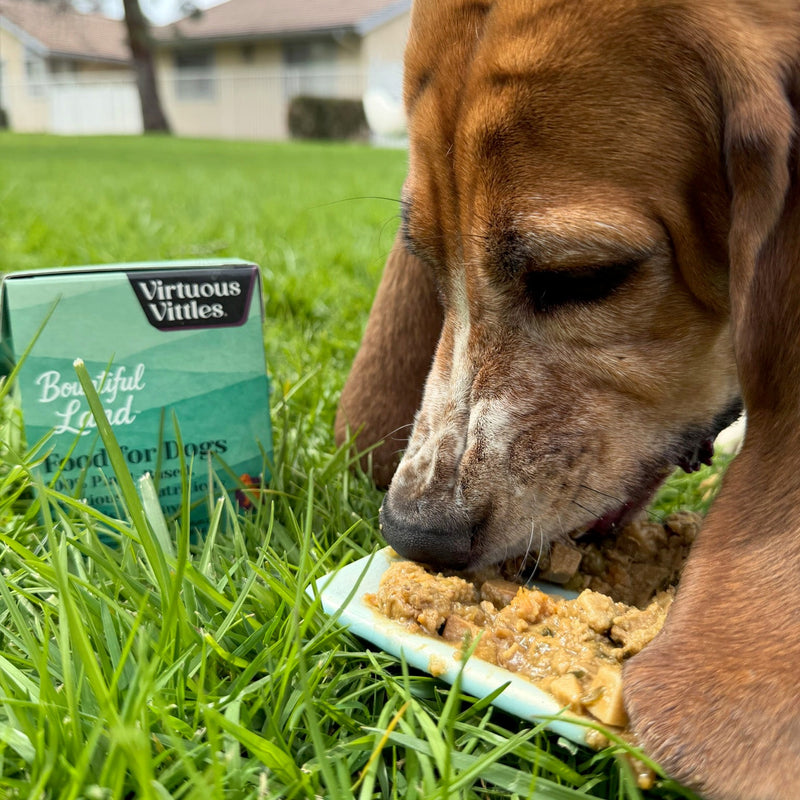
From first sniff to final lick, Virtuous Vittles foods are made to be delicious. Most dogs can switch to Virtuous Vittles immediately or within a few days, but if your furry friend has a sensitive stomach or a history of dietary upsets, you may want to stretch the transition to 10–14 days, increasing the new food by approximately 20–25% every three days. Always keep fresh water available.
Check our product pages for daily feeding amounts, and read more about calorie calculations in Size up portions like a pro.

Vegetarian dog and cat food
Species appropriate, made for how they actually live

Dogs are omnivores
Dogs are omnivores, and their digestive systems and nutrient requirements have evolved alongside humans for tens of millennia. By contrast, meat-heavy “carnivore” and raw-meat diets carry documented risks for dogs, including nutritional imbalances, diet-induced hyperthyroidism and exposure to foodborne bacteria. Genetic comparisons of modern domesticated dogs to their wolf ancestors reveal significant changes in nutrient requirements and ability to digest and use starches. In fact, domesticated dogs have many copies of the gene for starch digestion (just like humans) while wolves have only two.

Cats are carnivores… in the wild
While it’s true that lions living in the wilds of Tanzania probably couldn’t figure out how to feed themselves an exclusively plant-based diet, our kitties at home have access to a much different set of resources. With our help — and the abundance of healthy plant proteins — cats can get all the amino acids and nutrients they need.
Additionally, there’s nothing “natural” about many conventional cat foods. Many contain very little whole meat, relying instead on rendered animal byproducts, low-cost carbohydrates and supplements. Not exactly what our friend on the savannah would be eating.


Plant-based and thriving

8 in 10
Read moreconfirmed food allergies in dogs involve animal proteins like beef, dairy and chicken, not plant ingredients.

1.5 years
longer average lifespan that guardians reported for dogs on plant-based diets (14.1 years) than for meat-fed dogs.


Human-grade dog food
What human-grade actually means
“Human-grade” is one of the most borrowed phrases in pet food, but it has a specific meaning. Under AAFCO’s Human Grade Pet Food Standard, every ingredient must be fit for people to eat, and the finished food must be made, stored and shipped under the same FDA rules as the food in your pantry (21 CFR Part 117), in an FDA-registered human-food facility.
Most pet food is made in feed-grade facilities under a different set of rules (21 CFR Part 507), which allow ingredients that aren’t fit for people. Bountiful Land® meets the human-grade standard, with human-edible ingredients and full country-of-origin transparency.