Yes, dogs can eat broccoli. It's safe, it's nutritious, and it shows up in plenty of well-formulated dog meals for good reason — broccoli is rich in vitamin C, fiber, potassium, and antioxidants. The only catch is portion size: in large quantities, the natural compounds in broccoli (called isothiocyanates) can cause stomach upset.
Below: how to serve it, how much to give based on your dog's size, what to skip, and why broccoli is found in Virtuous Vittles recipes.
Yes — dogs can eat broccoli (with a few simple guidelines)
Broccoli is non-toxic to dogs and offers real nutritional value. The American Kennel Club, ASPCA, and most veterinary nutritionists agree it's a safe addition to a dog's diet when fed in moderation.
The simple rules:
- Keep portions small. Broccoli is a treat or a topper, not a meal.
- Go easy on seasoning. A tiny bit of salt or oil is fine, but no garlic or onion (both are toxic to dogs) and no extra salt.
- Watch the stems with small dogs. Broccoli stems are tougher to chew and can be a choking hazard. Cut small or stick to florets.
That's it. Beyond those three rules, broccoli is one of the safer vegetables you can share.
Nutritional benefits of broccoli for dogs

Broccoli punches well above its calorie count. A cup of chopped broccoli has about 31 calories and packs in:
- Vitamin C — supports the immune system and acts as an antioxidant. Dogs make their own vitamin C, but extra from food contributes to overall antioxidant capacity.
- Fiber — supports healthy digestion and a balanced gut microbiome.
- Potassium — important for muscle function, nerve signaling, and heart health.
- Vitamin K — plays a role in bone health and blood clotting.
- Sulforaphane — a sulfur-containing compound that's the focus of growing research on anti-inflammatory and cancer-protective properties.
- Low calorie density — useful for dogs who need to watch their weight without feeling shorted on volume.
This is the stuff a balanced diet is built on, not a single magic ingredient — but it's a respectable nutrient profile for a vegetable many households already keep in the crisper.
How to serve broccoli to your dog safely

A simple, practical sequence:
- Wash the broccoli thoroughly to remove any pesticide residue or dirt.
- Cut into small, dog-sized pieces. Match the piece size to your dog — a Yorkie eats different bites than a Lab.
- Choose raw or lightly cooked. Both work. Steamed, boiled, or roasted is gentler on digestion and reduces the isothiocyanate content slightly. Raw delivers more enzymes but is harder to chew.
- Skip stems for small dogs or cut them very small. Florets are easier and safer for everyone.
- Serve simply. A tiny bit of salt or oil is fine. No garlic, no onion, no cheese, no extra salt.
- Start with a small portion the first time, especially if your dog hasn't had broccoli before. Watch for any digestive upset over the next 24 hours before making it a regular addition.
That's the whole protocol. Broccoli is one of those rare foods where "just keep it simple" is genuinely the best advice.
How much broccoli can you give your dog?

The standard rule: treats and additions — including vegetables — should not exceed 10% of your dog's daily caloric intake. Broccoli is a treat, not a meal replacement.
A practical guide by size:
- Small dogs (under 20 lbs): one or two small florets
- Medium dogs (20–50 lbs): a small handful, cut into bite-sized pieces
- Large dogs (over 50 lbs): up to half a cup, cut into appropriate pieces
The isothiocyanate caution is real but easy to manage: in large quantities — think a dog who polishes off half a head of broccoli unsupervised — these compounds can cause gas, diarrhea, or stomach irritation. In normal treat-sized portions, they're a non-issue. If your dog gets into the broccoli stash and eats a lot at once, watch for GI signs and call your vet if anything looks serious.

Why Virtuous Vittles includes broccoli
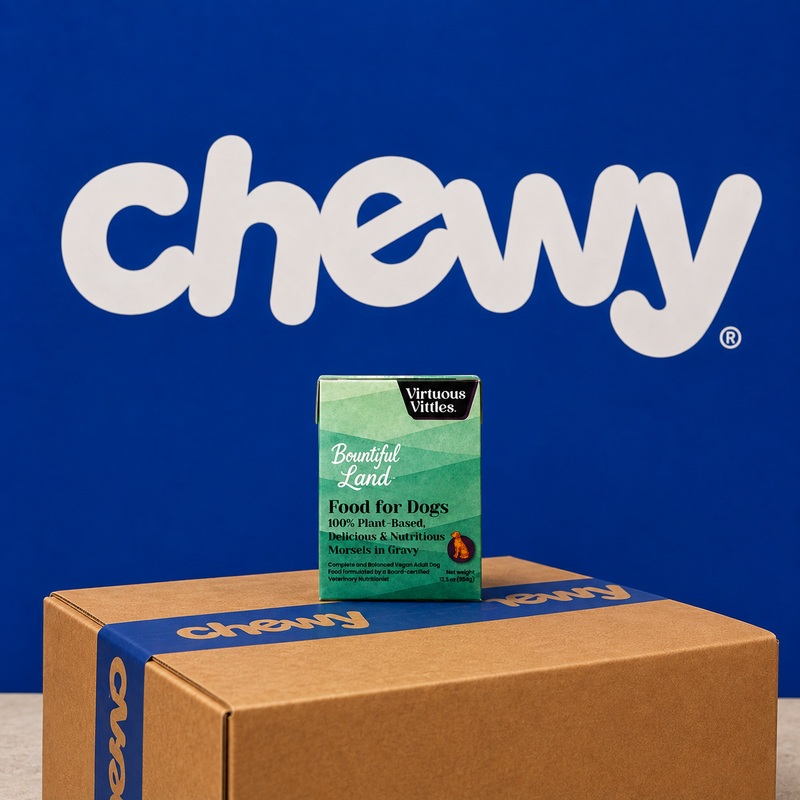
Broccoli is part of the vegetable blend in every Bountiful Land® meal — and not by accident.
Each Virtuous Vittles meal is formulated by Dr. Sarah Dodd, BVSc, MSc, PhD, DECVCN — a board-certified veterinary nutritionist whose research focus is plant-based companion animal nutrition. The recipe is complete and balanced to meet or exceed AAFCO nutrient guidelines, which means the broccoli, chickpeas, sweet potato, and other whole-food ingredients are calibrated to precisely deliver the right ratios of vitamins, minerals, fiber, and amino acids your dog actually needs.
The result: when your dog eats their Bountiful Land meal, they're already getting the benefits of broccoli at the right dose, in a meal that's complete on its own. The fresh broccoli you share at dinner is a bonus, not the foundation.
Nutrients matter, not meat. (New to plant-based feeding? Start with our complete guide to vegan dog food.)
Other vegetables safe for dogs (and a few to avoid)
If broccoli is a hit, here are other vegetables that are safe for most dogs in moderation:
- Celery
- Spinach
- Peas
- Beets
- Kale
- Chickpeas
- Black beans
- Lentils
- Sweet potato
- Edamame
And the ones to keep away from the bowl:
- Onion and garlic — toxic to dogs in any form (raw, cooked, powdered)
- Grapes and raisins — can cause kidney failure even in small amounts
The bottom line
Broccoli is safe, nutritious, and a reasonable thing to share with your dog as long as the portions stay small, the stems are managed for small dogs, and there's no garlic, onion, or extra salt in the mix. It's already in every serving of Virtuous Vittles Bountiful Land® at the right ratio, balanced alongside the other whole-food ingredients your dog needs.
If you want the easy way to try a complete-and-balanced 100% plant-based meal — broccoli included — the Bountiful Land® Bark Sampler is an introductory pack backed by our satisfaction guarantee: the lowest-risk way to find out if your dog will love it.